
India's government has implemented stringent new regulations under the Telecommunications Act 2023, mandating that all communication infrastructure providers, including those utilising cloud-based networks, must store telecommunication data exclusively within the country, a move expected to significantly impact domestic data centre demand.
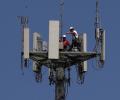
The Department of Telecommunications (DoT) has introduced a new authorisation regime, replacing multiple licences with a single permission for principal telecom services, aiming to simplify compliance and accommodate evolving technologies. This move is expected to ease business operations, enhance fraud prevention with AI, and expand connectivity, especially through satellite networks.
Reliance Jio's reintroduction of Jio Prime membership with a price lock until September 2027 and the retention of its entry-level daily unlimited data plan at ~299 rupees are seen by industry analysts as strong indicators of imminent tariff hikes across the Indian telecom sector.

Former NITI Aayog vice-chairman Rajiv Kumar has urged the government to maintain zero-fee UPI transactions for several more years, arguing that the benefits of UPI as a public good outweigh the costs. This comes amidst the government's recent decision to introduce a 0.4% fee on person-to-merchant UPI transactions above Rs 2,000 from October 15, a move that has drawn criticism.

Bharti Airtel's homegrown cloud platform, Airtel Cloud, has acquired approximately 40 customers within a year of its launch, with a significant portion coming from the manufacturing sector. The platform, designed for Indian companies, offers sovereign, telco-grade cloud infrastructure, connectivity, and GenAI-based provisioning, addressing the growing demand for secure, India-hosted data solutions, particularly for sensitive workloads and regulated sectors.

The Indian government has introduced a 0.4 per cent charge on UPI payments exceeding Rs 2,000 made to merchants, with a cap of Rs 300 for transactions of Rs 75,000 and above. This policy shift ends the zero-MDR regime, which was previously criticised by financial institutions. While essential sectors and capital markets have specific fee structures, small merchants with monthly UPI QR code earnings up to Rs 1 lakh remain exempt. Person-to-person transfers are unaffected, and measures are in place to prevent merchants from passing these costs to customers.

DIIs invested $22.8 billion in Indian equities in Q2CY26.

The Indian government has introduced a 0.4 per cent Merchant Discount Rate (MDR) on UPI payments exceeding Rs 2,000 made to merchants, effective from October 15, with a comprehensive framework set to take full effect by October 15, 2026. This policy aims to regulate transaction fees while protecting small merchants and person-to-person transactions.
Tax experts clarify that merchants will pay 18% GST on Merchant Discount Rate (MDR) for UPI payments exceeding Rs 2,000, effective October 15. However, registered merchants can claim Input Tax Credit (ITC), mitigating the tax burden. This move is expected to generate significant GST revenue for the exchequer while funding payment infrastructure.

The Finance Ministry has refuted allegations that US pressure influenced the decision to levy a 0.4 per cent Merchant Discount Rate (MDR) on select UPI payments. The ministry clarified that the NPCI guidelines prioritise RuPay credit cards on UPI to promote domestic alternatives and ensure a self-sustaining revenue model for smaller domestic companies, countering claims of favouring foreign payment providers.

The Finance Ministry has refuted allegations that US pressure influenced the decision to levy a 0.4% Merchant Discount Rate (MDR) on select UPI payments. It clarified that NPCI guidelines prioritise RuPay credit cards on UPI to foster a domestic payment ecosystem and that the MDR introduction aims to create a sustainable revenue model for smaller domestic companies, thereby protecting India's sovereignty in digital payments.

The Indian government has introduced a 0.4% Merchant Discount Rate (MDR) on UPI person-to-merchant (P2M) transactions exceeding Rs 2,000, effective October 15. This move ends nearly six years of fully free UPI payments, though person-to-person (P2P) transfers and small P2M payments remain free. The charges aim to bolster investment in UPI infrastructure, with specific exemptions and caps for essential sectors.

The Finance Ministry has clarified that the 0.4 per cent Merchant Discount Rate (MDR) on UPI transactions above Rs 2,000, effective October 15, is not expected to increase cash transactions or cause inflation. The ministry also dismissed allegations of US pressure influencing the decision, asserting that the policy aims to promote RuPay credit cards within the UPI ecosystem, and a monitoring mechanism will ensure the MDR burden is not passed on to consumers.

'The large number of tariff lines in the 90-99 per cent band highlights how deeply embedded Chinese sourcing has become in India's electronics imports.'

'It's A Cat And Mouse Game.'

Digital money is gradually starting to behave like software. It's no longer inert -- sitting passively in accounts. In the not-so-distant future, your money could become 'smart' and 'active,' understanding your preferences, paying your bills automatically, optimising your returns, and managing your risks -- all without you having to manage the details.

A frozen phone screen, a fake customer-care call, a screen-sharing request or even a duplicate SIM can give cybercriminals a route into your bank account.

Flash floods in Tibet's Gyirong County, near the China-Nepal border, have resulted in five deaths and 558 missing individuals, including 260 foreign nationals. The disaster also caused significant casualties in Nepal and disrupted infrastructure. Rescue operations are underway, and concerns are rising over a newly formed barrier lake that poses a risk of further flooding.

The National Payments Corporation of India (NPCI) stated that the Merchant Discount Rate (MDR) "is distributed only amongst the UPI ecosystem, to further invest into infrastructure resilience, innovation, cybersecurity (protecting the UPI infrastructure with banks and non-banks) and customer service."

The government is introducing a 0.4% Merchant Discount Rate (MDR) on UPI person-to-merchant payments above Rs 2,000, effective October 15. This move ends the zero-MDR regime, aiming to fund UPI infrastructure and sustainability, as the previous government subsidy was insufficient to cover operational costs. Payments between individuals and most everyday merchant transactions will remain free.

The search for N Chandrasekaran's successor as Tata Sons Chairman has reportedly narrowed to Tata Steel CEO T V Narendran, Tata Sons Executive Director Saurabh Agrawal, and NSE MD & CEO Ashish Chauhan, with Chauhan emerging as a potential 'dark horse' candidate.

Indian stock markets saw a significant rebound, with the Sensex jumping nearly 790 points, primarily fuelled by strong buying interest in telecom, pharma, and private banking shares, despite a volatile trading session and a weakening rupee.

Instant messaging platform Telegram has been restored in India after a week-long government ban, imposed due to its alleged role in circulating leaked NEET examination papers, expired. The Delhi High Court had upheld the ban as lawful and necessary.

In the next 36 months nearly 25 to 40 per cent of jobs will be under threat from AI and job losses are inevitable.
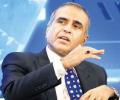
Telecom czar Sunil Bharti Mittal plans to hand over the reins of Bharti Airtel to his children in the next decade and desires that promoter firm Bharti Telecom regains over 50 per cent stake in the company.

From Ajnabee to 2.0, Akshay Kumar has had plenty of fun playing the bad guy, but which of his villainous turns is truly khatarnaak?

Ahmedabad Cyber Crime Branch has uncovered a Rs 1.5 crore WhatsApp fraud, leading to the arrest of two key SIM and OTP suppliers in West Bengal. The investigation revealed a sophisticated international cybercrime network spanning China, Pakistan, India, and Hong Kong, operating a "boss scam" and utilizing a "Cybercrime as a Service" model. Police recovered a significant portion of the defrauded amount and secured thousands of devices.

A Goldman Sachs report indicates that up to 12% of India's non-agricultural workforce is at risk of substitution by generative AI, while 42-48% could be complemented. The report highlights uneven impacts across sectors and job types, with IT-enabled services facing higher risk and physical tasks remaining less affected. Gen-AI is projected to boost India's labour productivity growth over the next decade.

'... that work is done. The task is to reallocate what has been built, with the courage of a founder and the discipline of an owner.'

'1991 was an exceptional period in Indian history.' 'A big 400-volt shock was administered to the system, which was required. Today, we are in a much, much better position.'

'Healthy double-digit returns are still possible, though a sharp rally is unlikely.'

Telegram CEO Pavel Durov has accused Reliance Group, which has a partial Meta stake, of lobbying for a ban on Telegram in India and sabotaging its access for users outside India through BGP hijacking. A senior telecom industry source dismissed these claims as 'fake news,' stating Durov confused Reliance Communications with Reliance Industries Ltd. The allegations come as the Indian government has ordered Google and Apple to delist Telegram temporarily and disable its message-editing feature in India due to concerns over paper leaks in the NEET-UG examination.

Indian benchmark indices Sensex and Nifty experienced a significant tumble in early trade, primarily driven by heavy selling in HDFC Bank following its quarterly earnings and a sharp spike in Brent crude oil prices due to escalating tensions between the US and Iran. Track Sensex, Nifty

The Enforcement Directorate is investigating a large-scale cyber fraud operation involving 5,300 Indian SIM cards used from Cambodia by a Malaysian national-led gang, duping people of hundreds of crores. The probe follows raids in Rajasthan and Punjab, identifying 30 bank accounts linked to the fraud.
Bharti Airtel is strategically shifting its focus towards data centres, cloud services, and financial services as key drivers for its next phase of growth, leveraging significant past investments in digital infrastructure, as outlined by Chairman Sunil Mittal in the company's Annual Report for 2025-26.

Indian stock markets this week will be primarily influenced by a series of corporate Q1 earnings, the evolving geopolitical situation in West Asia, and fluctuations in crude oil prices, according to market analysts.

Indian IT services firms are expected to report a soft Q1 FY27 performance due to a challenging macro environment, the impact of AI, and geopolitical uncertainties, leading to reduced discretionary spending and slower decision-making cycles, according to Motilal Oswal Financial Services.

Indian benchmark indices Sensex and Nifty closed flat, paring early gains due to renewed hostilities between the US and Iran, which unsettled investor sentiment and led to profit booking in metal, oil & gas, and telecom shares.

Airtel, which upgraded all postpaid customers to priority plans, argued that the service did not throttle or degrade the experience for its prepaid customers, forming the majority of its 368 million customers in the country.

Indian equity benchmarks Sensex and Nifty surged nearly 1 per cent, driven by strong earnings reports from FMCG and auto sectors, alongside a rally in Asian markets and signs of de-escalation in geopolitical tensions.
